Chicken Coop for 6 Chickens: What to Know Before Buying

Affiliate disclosure: Some links on this page are affiliate links. If you buy through them we earn a small commission at no extra cost to you. Recommendations are research-driven; we don't claim personal use of every product reviewed. Product prices and availability are accurate as of the date published and are subject to change. Always check Amazon for current pricing before purchasing. Learn more.

Quick Picks
Mobile Chicken Coop with Wheels for 4-6 Chickens, Large Outdoor Hen House with Run, Weatherproof Asphalt Roof,
Wheels enable relocation for fresh grazing areas and yard rotation
Buy on AmazonGUTINNEEN Large Chicken Coop on Wheels Mobile Wooden Hen House Weatherproof Duck Poultry Cage 67.3" L for 6-8 Chickens
Wheels enable easy repositioning and yard mobility without tools
Buy on AmazonAivituvin Mobile Chicken Coop with Wheels for 4-6 Chickens, Backyard Expandable Chicken House Duck Cage with Run, 2
Wheels enable repositioning to fresh grass areas without disassembly
Buy on Amazon| Product | Price Range | Top Strength | Key Weakness | Buy |
|---|---|---|---|---|
| Mobile Chicken Coop with Wheels for 4-6 Chickens, Large Outdoor Hen House with Run, Weatherproof Asphalt Roof, best overall | $$ | Wheels enable relocation for fresh grazing areas and yard rotation | Mobile design may require regular maintenance of wheels and joints | Buy on Amazon |
| GUTINNEEN Large Chicken Coop on Wheels Mobile Wooden Hen House Weatherproof Duck Poultry Cage 67.3" L for 6-8 Chickens also consider | $$ | Wheels enable easy repositioning and yard mobility without tools | Mobile design may sacrifice structural rigidity versus fixed coops | Buy on Amazon |
| Aivituvin Mobile Chicken Coop with Wheels for 4-6 Chickens, Backyard Expandable Chicken House Duck Cage with Run, 2 also consider | $$ | Wheels enable repositioning to fresh grass areas without disassembly | Mobile coop may require regular wheel maintenance on uneven terrain | Buy on Amazon |
| Mobile Chicken Coop with Wheels for 4-6 Chickens, Large Outdoor Hen House with Run, Weatherproof Asphalt Roof, also consider | $$ | Weatherproof asphalt roof protects birds from rain and elements | Mobile design may require regular wheel maintenance on uneven terrain | Buy on Amazon |
| VEVOR Metal Chicken Coop, 6.56x6.56x6.56ft Large Walk-in Chicken Run with Cover, Spire Roof Hen House Enclosure with also consider | $$ | Metal construction resists rust and extends outdoor durability | Metal frame may require assembly and periodic maintenance | Buy on Amazon |
Picking a coop for six chickens is straightforward until you start reading the reviews. Capacity claims stretch, weatherproofing varies, and a coop that works fine in a mild-winter state can fail badly in a hard one. Browse the full range of chicken coops before committing — what looks adequate on a product page often tells a different story once you understand what to actually look for. For a broader orientation to the category, the Chicken Coop buying guide covers the fundamentals.
The flat-pack coop I started with didn’t survive its first Vermont winter. Cheap construction, no real insulation, and a fox took two birds the following spring. That sequence made predator protection and build quality non-negotiable — and it’s the lens through which every pick here was evaluated.
What to Look For in a Chicken Coop for 6 Chickens
True Capacity vs. Rated Capacity
Manufacturer capacity claims are optimistic. The standard recommendation is four square feet of interior space per bird in the sleeping area and ten square feet per bird in the run. A coop rated for six chickens may technically hit those numbers — or it may be counting the run space as interior square footage to inflate the claim. Read the dimensions, not the marketing copy.
Overcrowding causes real problems: feather pecking, disease spread, and stress-related drops in egg production. If your flock is already at six birds and you have any thought of adding more, size up now rather than replacing the coop in two years. A unit rated for six to eight birds gives you breathing room.
Predator Protection
Hardware cloth is not the same as chicken wire. Chicken wire keeps chickens in; it does not keep predators out. A determined raccoon can tear through standard chicken wire with its hands. Hardware cloth — welded wire mesh with small openings — is what actually stops them. Check what the floor, sides, and door closures are made from before buying.
Latches matter as much as wire. Raccoons can work simple hook latches open. Look for slide-bolt or two-step closures on doors and nest box access panels. If the product listing shows a single hook latch on the main door, that’s a concern worth noting.
Weatherproofing and Roof Quality
An asphalt shingle roof or a solid plywood roof with weatherproof coating handles rain better than a single layer of thin wood. Standing water on a flat or poorly drained roof degrades the wood underneath it, and rot spreads from the roof into the frame faster than most buyers expect. Look for overhanging eaves and sealed seams.
Ventilation and weatherproofing are not opposites — they’re both required. A tightly sealed coop with no ventilation builds up ammonia from droppings and moisture from breath, which is harder on chickens than cold air. Ridge vents or covered upper ventilation panels let air move without letting rain in.
Mobility and Yard Management
A mobile coop on wheels lets you rotate the flock across different sections of the yard, which prevents the grass-stripping and mud-pit problem that comes from stationary coops in small yards. Rotation also reduces the parasite and pathogen load in any one area. The tradeoff is structural: wheels and joints add parts that can fail, and a mobile frame is generally lighter than a fixed one.
Not every yard suits a mobile coop. Uneven ground, slopes, or small yards where rotation isn’t practical may make a stationary or semi-permanent structure the better call. Think about your actual yard before defaulting to whichever format appears first in search results. Reviewing the full chicken coop options for your situation — mobile versus fixed, wood versus metal — is worth doing before you commit.
Wood Construction and Long-Term Maintenance
Untreated wood in a chicken coop degrades faster than most buyers plan for. Moisture from rain, droppings, and condensation all work on uncoated wood year-round. Fir and pine are common choices; both require regular sealing or painting to last more than two or three seasons in a wet climate. Ask whether the wood is pre-treated and whether replacement parts are available.
Raised floors help significantly. A coop floor elevated off the ground dries faster, resists rot longer, and eliminates the damp-soil contact that invites fungal growth. If a coop’s floor sits directly on the ground, factor in the added maintenance that will require.
Top Picks
Mobile Chicken Coop with Wheels for 4-6 Chickens (Asphalt Roof — B0DPQKWMYS)
The Mobile Chicken Coop with Wheels for 4-6 Chickens makes the case for an asphalt roof clearly — it’s one of the few components in a mid-range wood coop that actively extends the life of the structure underneath it. Owner reports consistently point to the roof holding up well across seasons where cheaper single-ply wood panels fail within a year.
For a true six-bird flock, this sits at the upper edge of its stated capacity. Verified buyers with four to five birds report comfortable space; those pushing six note it works but leaves little room for growth. The wheels function well on flat to gently sloped yards — not ideal on heavily uneven terrain, where the joint stress accelerates over time.
The run space is functional for a small flock and integrates cleanly with the sleeping area. The limitation is that it’s not expandable. If your flock stays at four to six birds and your yard allows regular rotation, this is a solid, practical choice at the mid-range price point.
Check current price on Amazon.
GUTINNEEN Large Chicken Coop on Wheels
The GUTINNEEN Large Chicken Coop on Wheels is the longest unit in this group at 67.3 inches, and that length matters practically. It’s rated for six to eight chickens, which means a true six-bird flock has genuine space rather than just the minimum. Owner consensus points to the interior dimensions being accurate to the listing — a meaningful distinction given how often capacity is overstated.
Weatherproof construction and wheel mobility together make this a capable year-round option for most climates. The wooden frame requires consistent sealing and inspection, particularly at the joints and floor — the same maintenance requirement that applies to every wood coop in this category, but worth naming explicitly because it’s where owners most often report early deterioration if they skip it.
Repositioning works without tools, which is the practical standard to hold mobile coops to. If the stated capacity gives you room to add a bird or two later without immediately replacing the structure, that’s real long-term value.
Check current price on Amazon.
Aivituvin Mobile Chicken Coop with Wheels for 4-6 Chickens
The distinguishing feature of the Aivituvin Mobile Chicken Coop with Wheels is the expandable design — the capacity isn’t fixed at four to six birds. Most coops in this category require a full replacement when a flock grows; this one is built to accommodate an expansion module. For a buyer who suspects their flock count will climb, that’s a meaningful structural advantage.
Owner reports note the wheels reposition smoothly on level to moderate terrain, and the integrated run keeps the footprint consolidated without requiring a separate pen setup. The trade-off is cost: expandable systems carry a premium over fixed-size alternatives at the same quality tier, and the additional components in an expandable frame add more potential maintenance points.
The value case here depends entirely on whether you’ll use the expandability. If six birds is genuinely your ceiling and you don’t anticipate adding more, a simpler fixed-size unit at a lower price is probably the stronger call. If you started with three birds and ended up with fourteen — a trajectory that’s more common than it sounds — the expandable design pays off.
Check current price on Amazon.
Mobile Chicken Coop with Wheels for 4-6 Chickens (Asphalt Roof — B0DPQK9Z6Y)
The Mobile Chicken Coop with Wheels for 4-6 Chickens shares the asphalt roof construction that makes this design class worth considering seriously. Weatherproofing at the roof level is where wood coops most commonly fail, and an asphalt shingle surface handles rain and seasonal freeze-thaw cycles significantly better than single-ply wood panels.
This unit’s capacity tops out at six birds, making it best suited to a flock that’s settled at that number with no expansion plans. Verified buyers consistently note the wheel mobility as genuinely functional — not a token feature — with smooth repositioning across standard yard surfaces. The limitation is scalability: if flock needs change, the structure doesn’t flex.
For a steady-state six-bird backyard flock on a reasonably level yard, this delivers reliable weatherproofing and practical mobility without overbuilding for a situation that doesn’t require it.
Check current price on Amazon.
VEVOR Metal Chicken Coop 6.56x6.56x6.56ft Walk-In
The VEVOR Metal Chicken Coop is a different category of structure from the wooden mobile units above — and for some buyers, it’s the right answer precisely because of that difference. A 6.56-foot walk-in metal run at this footprint is genuinely large for a six-bird flock, giving birds space to move, scratch, and exhibit normal behavior rather than standing in a compressed run waiting for supervised free-range time.
Metal construction resists the rot and weathering that are the long-term failure mode for wood coops. The trade-off is that metal frames require assembly and are fixed in place — yard rotation isn’t an option once it’s set up. For a yard where rotation isn’t practical anyway, or where the priority is durability over mobility, the fixed structure is a feature rather than a limitation.
The spire roof with integrated cover handles weather without requiring the buyer to source a separate rain shield. Field reports from verified purchasers point to solid rust resistance over multiple seasons, which is the relevant durability metric for a permanently sited outdoor structure.
Check current price on Amazon.
Buying Guide
How Many Square Feet Does a Six-Bird Flock Actually Need?
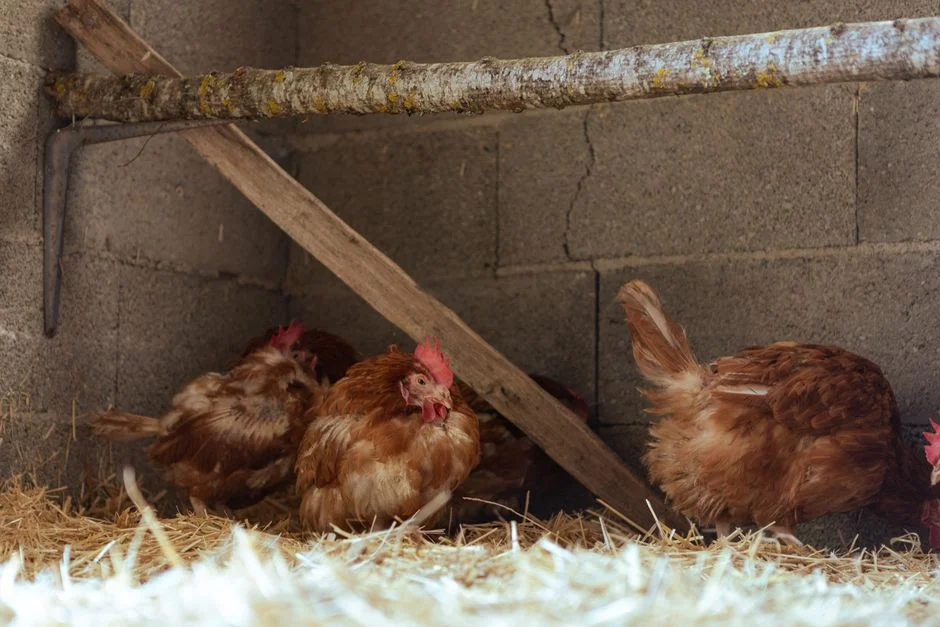
The numbers most often cited are four square feet per bird indoors and ten square feet per bird in the run — so a six-bird flock needs roughly 24 square feet of interior sleeping space and 60 square feet of run. Most coops in this size category don’t fully hit the run number, which is why supervised free-range time matters if the run is on the smaller end. Don’t let a “fits 6 chickens” label substitute for reading the actual listed dimensions.
Interior height matters too, particularly for cleaning access. A coop you can’t reach into easily doesn’t get cleaned as often as it should, and ammonia buildup is a genuine health risk.
Mobile vs. Fixed: Which Setup Is Right for Your Yard?
Mobile coops work best on flat to gently sloped yards where rotation across sections is practical. The benefit is real — moving the flock every week or two prevents the bare-ground mud problem and distributes the manure load across a larger area. By the time I was managing fourteen birds, the yard section under the fixed original coop was stripped bare by March.
Fixed structures, including the metal walk-in run, suit smaller yards where rotation isn’t possible, or situations where the priority is maximum structural stability and durability. A well-built stationary coop on a solid base will typically outlast a mobile one with equivalent initial quality. The right choice depends on your yard’s layout, not on which format appears more popular in search results. The range of chicken coops covers both formats in more detail if you’re still working through that decision.
Predator-Proofing Before You Buy
Hardware cloth versus chicken wire is the most important material distinction in this category. Chicken wire is a containment barrier; it doesn’t stop a determined raccoon, fox, or dog. Hardware cloth with half-inch openings is the correct material for the sides and floor of any coop where predator pressure is real.
Latches are the second failure point. Single hook latches can be worked open by raccoons — this is well-documented in owner reports and poultry keeper forums. Look for slide bolts or two-step closures on every access point: the main door, the nest box, and any secondary run entry. A fox took two of my birds the spring after my first coop failed; since then, predator protection has been the first thing I look at, not the last.
Wood Maintenance for Long-Term Durability
Every wooden coop in this category requires regular sealing, painting, or treatment with a water-repellent finish. Untreated fir or pine in outdoor conditions degrades quickly — within two to three seasons in a wet climate. The joints, floor edges, and roof-to-wall seams are where moisture infiltrates first. Inspect and reseal these points every spring before the wet season starts.
A raised floor makes a measurable difference. Direct ground contact keeps the floor damp, which accelerates rot and creates conditions favorable to mites and other parasites. If a coop you’re considering has a ground-contact floor and you’re in a wet climate, factor the added maintenance cost and shortened lifespan into the decision.
Ventilation Without Drafts
Chickens tolerate cold better than they tolerate damp, stagnant air. A sealed coop accumulates ammonia from droppings and moisture from breath, both of which cause respiratory problems over time. Adequate ventilation — ideally at ridge height or in covered upper panels — lets moist air escape without creating a draft at bird level.
The distinction matters most in winter. A coop that’s warm but poorly ventilated is harder on birds than a coop that’s cold but well-aired. Look for ventilation openings that can be partially closed in extreme cold but not eliminated entirely. Adjustable ventilation is worth paying attention to in product listings, especially for buyers in colder climates.
Frequently Asked Questions
How much space does a chicken coop for 6 chickens actually need?
The standard is four square feet of interior sleeping space per bird and ten square feet of run space per bird, putting a six-bird flock at roughly 24 square feet indoors and 60 square feet of run. Most coops in this category meet the indoor number but fall short on run space, so supervised free-range time fills the gap. Always read the listed dimensions rather than relying on the stated bird capacity alone.
Are mobile chicken coops on wheels durable enough for year-round use?
Owner consensus is that well-built mobile coops hold up year-round with consistent maintenance — sealing the wood annually, inspecting wheel joints for wear, and keeping the unit on reasonably level ground. The GUTINNEEN Large Chicken Coop on Wheels is the longest and most spacious option here and carries good reports for multi-season durability. Mobile frames are inherently lighter than stationary structures, so longevity depends more on maintenance discipline than on the format itself.
Is a metal coop better than a wooden one for predator protection?
Metal construction like the VEVOR Metal Chicken Coop resists chewing and tearing better than wood, but the quality of the mesh and the latches matters as much as the frame material. A metal coop with large mesh openings or weak closures is less secure than a well-built wooden coop with hardware cloth and slide-bolt latches. Evaluate the access points and mesh gauge on any coop before assuming material alone determines security.
Can I keep 6 chickens in a coop rated for 4–6 birds?
Yes, but you’re at the upper end of the stated capacity, which means less margin for flock dynamics issues like pecking and stress. Coops rated for four to six birds work for six, but they leave no room for growth. If there’s any chance your flock expands, the Aivituvin Mobile Chicken Coop with Wheels is the only option in this group with an expandable design that avoids a full replacement later.
What’s the most important thing to check before buying a chicken coop?
Predator protection: specifically, whether the mesh is hardware cloth or chicken wire, and whether the door and nest box closures use slide bolts or simple hook latches. Chicken wire keeps birds in but doesn’t stop raccoons, foxes, or dogs. Latches that can be nosed or pawed open are a documented failure point. Get those two things right first, then evaluate weatherproofing and capacity.
Where to Buy
Mobile Chicken Coop with Wheels for 4-6 Chickens, Large Outdoor Hen House with Run, Weatherproof Asphalt Roof,See Mobile Chicken Coop with Wheels for 4… on Amazon