Automatic Chicken Waterer Guide: 5 Options Compared

Affiliate disclosure: Some links on this page are affiliate links. If you buy through them we earn a small commission at no extra cost to you. Recommendations are research-driven; we don't claim personal use of every product reviewed. Product prices and availability are accurate as of the date published and are subject to change. Always check Amazon for current pricing before purchasing. Learn more.
Quick Picks
Omlet Insulated Chicken Waterer, 3 Gallon
Insulated construction maintains water temperature in cold climates
Buy on AmazonLittle Giant® Automatic Poultry Fount
Automatic mechanism eliminates manual refilling throughout day
Buy on AmazonLittle Giant® Automatic Poultry Fount
Automatic mechanism reduces daily labor for poultry keepers
Buy on Amazon| Product | Price Range | Top Strength | Key Weakness | Buy |
|---|---|---|---|---|
| Omlet Insulated Chicken Waterer, 3 Gallon best overall | $$ | Insulated construction maintains water temperature in cold climates | Insulation adds weight and cost versus standard waterers | Buy on Amazon |
| Little Giant® Automatic Poultry Fount also consider | $$ | Automatic mechanism eliminates manual refilling throughout day | Automatic systems require more maintenance than passive waterers | Buy on Amazon |
| Little Giant® Automatic Poultry Fount also consider | $$ | Automatic mechanism reduces daily labor for poultry keepers | Manual refilling still needed; automatic feature has capacity limits | Buy on Amazon |
| Omlet Insulated Chicken Waterer, 1.5 Gallon also consider | $$ | 1.5 gallon capacity suits small to medium flocks well | Insulated construction likely increases weight and portability difficulty | Buy on Amazon |
| Little Giant® Automatic Poultry Waterer with Cover also consider | $$ | Cover protects water from debris and contamination outdoors | Fixed capacity may require frequent refills for large operations | Buy on Amazon |
Hauling water twice a day in January, with fourteen birds waiting and the ground frozen solid, is the moment most backyard keepers stop thinking about waterers as an afterthought. Once the flock grows past six or seven birds, what used to take five minutes starts eating a real piece of your morning. An automatic chicken waterer changes that equation — not by eliminating the chore entirely, but by stretching the intervals and reducing the daily labor to something manageable. This overview covers five options worth considering, from insulated models built for cold climates to gravity-fed founts that need no electricity.
The right choice depends on flock size, climate, and how much hands-on maintenance you’re willing to do. For a broader look at how different waterer styles work and what to expect from each, the Chicken Waterer guide covers the full category.
What to Look For in an Automatic Chicken Waterer
Capacity and Flock Size
Capacity is the first number that matters, and it’s easy to underestimate. A single bird drinks roughly a pint of water per day under normal conditions — more in heat, more if they’re laying actively. A 1.5-gallon waterer holds enough for eight to twelve birds for one day before it needs refilling. A 3-gallon model extends that interval considerably for a flock of similar size, or handles a larger flock on the same schedule.
The math gets more consequential in winter, when you may be refilling more often to prevent freezing, or less often if insulation is doing its job. Matching capacity to actual flock size — not the maximum the waterer could theoretically serve — is worth doing before purchasing.
Insulation and Cold-Climate Performance
Frozen water is useless water. In climates with hard winters, an uninsulated waterer left outside overnight will freeze solid by morning, and birds that can’t access water for even a few hours suffer real consequences. Insulated models slow the freeze significantly, though no passive insulation holds indefinitely below a certain temperature.
The honest question to ask is how cold your winters actually get, and whether insulation alone is sufficient or whether you need a heated base or an insulated waterer as part of a larger cold-weather setup. Insulation adds weight and cost — it’s worth it in Vermont in January, less so in a mild coastal climate.
Contamination and Debris
Open water troughs foul quickly. Chickens scratch, dust-bathe nearby, and will walk through a waterer given any opportunity. Fount-style designs, where water is dispensed into a small trough or nipple rather than sitting in an open basin, reduce the contamination problem substantially.
Cover designs add another layer — keeping debris, droppings, and insects out of the water between refills. For birds kept in a run rather than free-ranging, where the ground around the waterer gets heavily trafficked, contamination is a daily problem. The waterer design should address it structurally, not just rely on frequent cleaning.
Mechanism Type: Gravity vs. Automatic Float
“Automatic” covers two meaningfully different designs. Gravity-fed waterers release water as birds drink, drawing down a reservoir — they are passive and require no moving parts or electricity, but they still need to be refilled manually when the reservoir empties. Float-valve systems, connected to a hose or water line, maintain a constant water level without any manual refilling at all.
For most backyard keepers, a gravity-fed design is sufficient. For larger operations or keepers who travel, a float-valve connection to a water supply eliminates the refill chore entirely. Exploring the range of chicken waterer options by mechanism type is worth doing before committing to a style — the two approaches have meaningfully different maintenance profiles.
Ease of Cleaning
Whatever design you choose will need regular cleaning. Algae builds up, biofilm develops, and in warmer months the timeline is shorter than most keepers expect. Waterers with wide openings, smooth interiors, and minimal internal hardware are faster to clean than designs with narrow necks, valves, or complex assemblies.
Before purchasing, consider whether you can reach every interior surface without tools, and whether the design comes apart in a way that allows thorough rinsing. A waterer that’s difficult to clean will get cleaned less often — and that has real consequences for flock health.
Top Picks
Omlet Insulated Chicken Waterer, 3 Gallon
The Omlet Insulated Chicken Waterer, 3 Gallon is the strongest choice for cold-climate keepers with a flock large enough to justify the capacity. Omlet’s insulated construction keeps water accessible longer in freezing temperatures — owner reports from keepers in northern climates consistently note water staying liquid through overnight lows that would freeze standard plastic waterers solid by morning.
At 3 gallons, the capacity suits flocks of twelve to twenty birds on a once-daily refill schedule, or smaller flocks over a longer interval. That matters in winter, when the motivation to make fewer trips to the coop is highest and the conditions for doing so are worst.
The trade-off is weight and size. A full 3-gallon insulated waterer is heavier than a standard model, and for a small backyard coop with three or four birds, the capacity is more than necessary. Owner feedback reflects this — keepers with larger flocks in cold climates rate it consistently well; those with smaller flocks in mild climates find lighter, simpler options more practical.
Check current price on Amazon.
Little Giant® Automatic Poultry Fount
The Little Giant® Automatic Poultry Fount is a reliable mid-range option for keepers who want a fount-style design from a brand with a long track record in poultry equipment. The fount configuration — where water is dispensed into a small drinking trough rather than sitting in an open basin — addresses contamination more effectively than open-top designs. Verified buyers note that birds take to it quickly and that the trough stays cleaner between refills than comparable open-style waterers.
The automatic mechanism reduces how often you need to intervene, though it does not eliminate manual refilling entirely — the reservoir has a fixed capacity, and once it’s empty, it needs attention. For a small to mid-size flock in a moderate climate, that’s a reasonable trade-off. For a larger flock in a cold winter, the capacity ceiling will be felt.
Maintenance on automatic mechanisms requires more attention than passive gravity-fed designs. Valves and seals need periodic inspection, and any moving part is a potential failure point. The Little Giant’s reputation in this category is well-established, and owner feedback on longevity is generally positive — but the maintenance requirement is real.
Check current price on Amazon.
Little Giant® Automatic Poultry Fount (Gravity-Fed)
The Little Giant® Automatic Poultry Fount in its gravity-fed configuration is the lower-complexity option for keepers who want reduced daily labor without the maintenance overhead of a float-valve or automatic fill mechanism. No electricity, no moving parts beyond the gravity release — the reservoir empties as birds drink and needs manual refilling when it runs low.
Owner feedback on this model highlights its durability and ease of use. It won’t win on features, but it’s a design that holds up over seasons of daily use and doesn’t introduce failure modes. For a keeper whose main goal is reducing the number of trips rather than eliminating them, this is a practical choice.
Cold-weather performance is the limitation. Without insulation, outdoor use in freezing climates requires a heated base or daily management to keep water from freezing. That’s a solvable problem, but it adds a piece to the setup that the insulated Omlet models address structurally.
Check current price on Amazon.
Omlet Insulated Chicken Waterer, 1.5 Gallon
For small flocks — up to six or eight birds — in cold climates, the Omlet Insulated Chicken Waterer, 1.5 Gallon is the more appropriately scaled version of the 3-gallon model. The insulation performs the same function: slowing the freeze in overnight temperatures that would render a standard waterer useless by morning. At 1.5 gallons, the waterer is lighter and easier to carry, which matters when you’re navigating an icy path to the coop.
Owner reports from small-flock keepers in cold regions consistently put this among the better-performing options for winter use without a heated setup. The Omlet build quality is evident — this isn’t a flimsy plastic design that cracks in a hard freeze.
The limitation is straightforward: for a flock that has grown past eight birds, refilling becomes frequent enough that the larger 3-gallon model makes more sense. The 1.5-gallon is right-sized for a starter flock or a secondary waterer in a small coop section.
Check current price on Amazon.
Little Giant® Automatic Poultry Waterer with Cover
The Little Giant® Automatic Poultry Waterer with Cover adds one practical feature that the uncovered fount designs lack: a lid that keeps debris, droppings, and insects out of the water supply. For birds kept in a run with heavy foot traffic around the waterer, that cover reduces contamination between cleanings in a way that matters.
Owner feedback on this model is consistent on two points: the cover does what it’s supposed to do, and the Little Giant build is durable over time. For keepers whose primary concern is water quality rather than climate performance, this is the more targeted choice among the Little Giant lineup.
The trade-off is that the manual filling process is slower than open-top designs, and the automatic mechanism has the same capacity ceiling that applies across the Little Giant fount range. For a small flock in a temperate climate where contamination is the main problem to solve, the cover design earns its place.
Check current price on Amazon.
Buying Guide
How Flock Size Should Drive the Decision
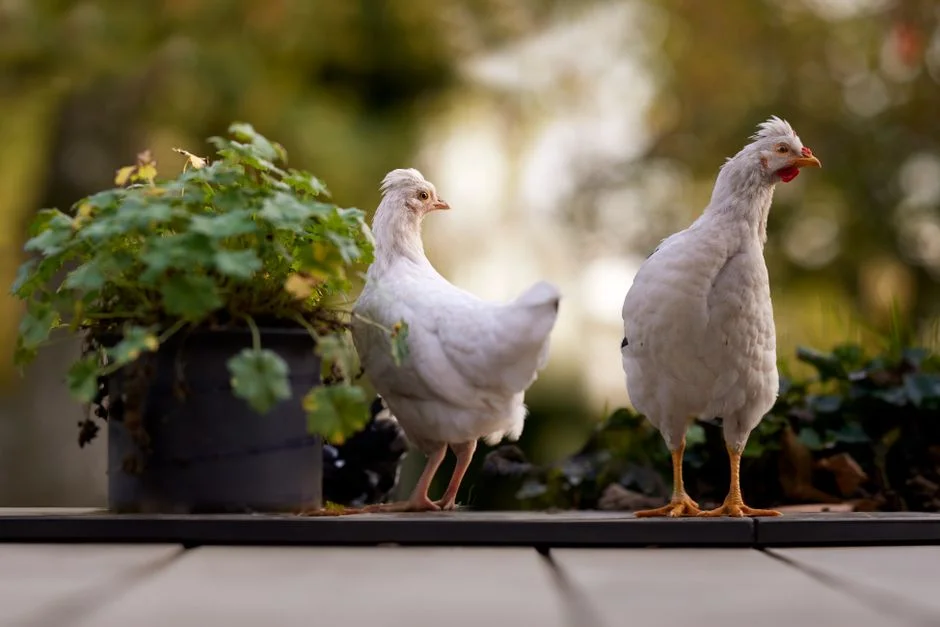
The single most useful anchor for choosing a waterer is honest flock size — current count, not aspirational ceiling. A small backyard flock of three to five birds has genuinely different needs than a flock of twelve to fourteen. The 1.5-gallon Omlet suits the smaller end of that range. The 3-gallon suits the larger. The Little Giant founts sit in a middle range that works across flock sizes with different refill frequencies.
What changes with flock size isn’t just capacity — it’s also how much any maintenance friction matters. With five birds, spending an extra ten minutes cleaning a complex waterer is tolerable. With fourteen birds and everything else that goes with a larger flock, a simpler design that cleans quickly carries real weight.
Cold Climate vs. Temperate Climate
Climate is the second axis. In a temperate climate where freezing is not a regular concern, the insulation premium on the Omlet models may not be worth it — a standard gravity-fed design at lower cost and weight does the job. In a climate with hard winters, insulation is not a luxury feature; it’s functional.
The relevant question is not just whether your winters get cold, but how cold, and whether your coop setup provides any ambient warmth. A coop with a heat lamp may protect an uninsulated waterer adequately. A coop in an unheated outbuilding at -10°F needs either insulation or a heated base. No passive waterer holds indefinitely at extreme temperatures.
Automatic vs. Gravity-Fed: What the Distinction Actually Means
The term “automatic” is used loosely across this product category, and it’s worth clarifying before purchasing. A gravity-fed design releases water as birds drink, maintaining a consistent level in the trough without manual dispensing — but it still requires manual refilling when the reservoir runs dry. That’s not fully automatic; it’s self-regulating within a fixed capacity.
A true automatic system connects to a water line and maintains level via a float valve, requiring no manual refilling at all. None of the products in this roundup are that type. All five require periodic refilling. The distinction matters because buyer expectations sometimes don’t match the product — “automatic” in this context means reduced-intervention, not zero-intervention. The full range of waterer types covers both categories if a line-connected system is what your setup requires.
Contamination and Where the Waterer Lives
Where you place the waterer in your run or coop affects contamination faster than most keepers expect. A waterer positioned at scratch-and-peck height, near a feeding area, or in a high-traffic corner will foul within a day. Standard guidance — raise the waterer to back height, place it away from the feeder — reduces the problem but doesn’t eliminate it.
Design matters too. A covered waterer like the Little Giant with Cover protects the water supply between refills. A fount design with a small drinking trough rather than an open basin reduces the surface area available for contamination. Neither is a substitute for regular cleaning, but both reduce how quickly cleaning becomes urgent.
Maintenance Honesty
Every waterer requires cleaning, and the frequency is higher than the instructions suggest. In warm weather, algae can establish in three to four days in a clear or lightly tinted container with any sunlight exposure. Biofilm builds faster in warm, humid conditions. Whatever waterer you choose, build the cleaning cadence into your regular coop routine — not as an occasional task but as a weekly minimum, more often in summer.
The practical implication for purchasing: favor designs with smooth interiors and wide openings over those with narrow necks or internal hardware that’s difficult to reach. A waterer that cleans in two minutes will get cleaned on schedule. A waterer that requires disassembly will get deferred.
Frequently Asked Questions
What size automatic chicken waterer do I need for a small backyard flock?
For a flock of six to eight birds, a 1.5-gallon waterer provides roughly a day’s supply under normal conditions. The Omlet Insulated Chicken Waterer, 1.5 Gallon is well-matched to this range, particularly in colder climates. Flocks of ten or more will run through that capacity faster and are better served by a 3-gallon model. Capacity needs also increase in hot weather, when birds drink more.
How do automatic chicken waterers handle freezing temperatures?
Passive insulation slows freezing but does not prevent it indefinitely — how long depends on the insulation quality and the ambient temperature. The Omlet insulated models perform noticeably better in cold conditions than standard plastic waterers based on owner reports from northern climates. Below sustained freezing temperatures, a heated base or coop management strategy is still required. No passive waterer substitutes for active heat at extreme lows.
Is a gravity-fed waterer actually automatic?
Not in the fully hands-free sense. Gravity-fed designs like the Little Giant® Automatic Poultry Fount maintain a consistent water level in the trough as birds drink, which reduces the frequency of manual intervention — but the reservoir still needs refilling when it empties. True automatic systems connect to a water line. For most backyard keepers, gravity-fed is sufficient; for keepers who travel or manage larger operations, a line-connected float system is worth investigating.
Which is better for contamination: the Little Giant Fount or the Little Giant Waterer with Cover?
They address contamination differently. The fount design limits the surface area of exposed water by dispensing into a small trough, which reduces the opportunity for debris and droppings to enter. The Little Giant® Automatic Poultry Waterer with Cover physically blocks access to the water supply from above, which is more effective in runs with heavy overhead debris or active dust-bathing nearby. In a typical backyard coop run, the cover design provides the more direct protection.
How often do automatic chicken waterers need to be cleaned?
Weekly cleaning is a practical minimum under normal conditions — more often in summer or if algae appears. The design of the waterer affects how quickly that interval needs to shorten: open basins foul faster than covered or fount-style designs, and containers with sun exposure develop algae faster than shaded ones. Waterers with smooth interiors and wide openings clean faster, which makes it easier to keep the schedule. A cleaning cadence that takes two minutes on a set schedule is more sustainable than a thorough scrub when contamination becomes visible.
Where to Buy
Omlet Insulated Chicken Waterer, 3 GallonSee Omlet Insulated Chicken Waterer, 3 Ga… on Amazon